An edge is only useful if you understand it. This guide shows you how to read one from start to finish.
Start with the inputs
Open a match and look at the inputs first. Elo tells you baseline strength. Form tells you recent direction. The expected-goals proxy tells you chance quality. If the three agree, the signal is cleaner. If they disagree, the model is telling you the picture is mixed.
Read the probability, not the pick
The model outputs a probability for each outcome, not a yes or no. A 54 percent home win is a lean, not a certainty. Treat it as a probability and size your view accordingly.
Compare to the market
Strip the margin from the price to get the market's implied probability. The edge is the gap between our number and theirs. A small edge on a noisy match is weaker than a large edge on a clear one.
Judge yourself on the close
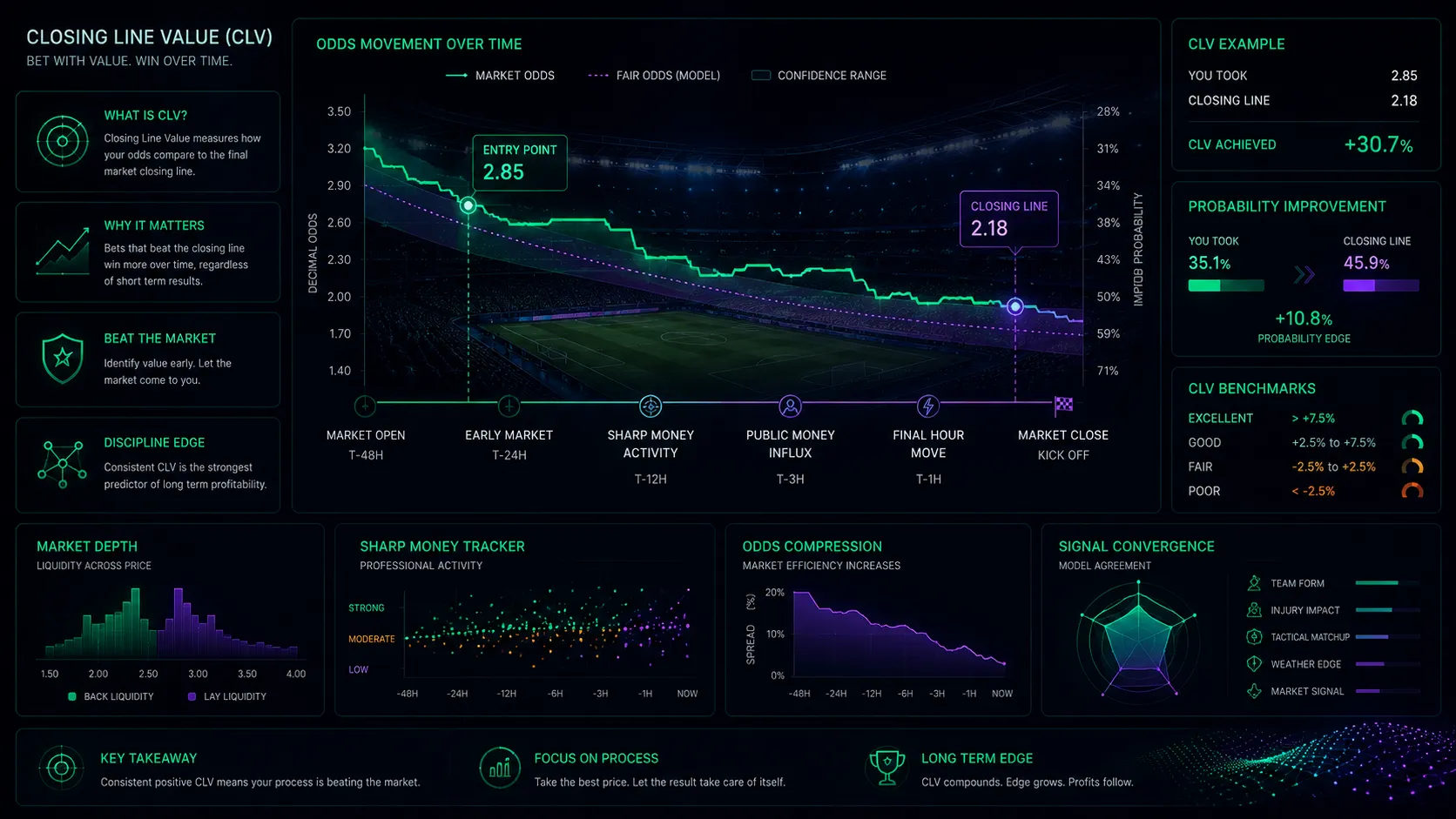
Results are noisy. The honest scoreboard is closing line value. If you beat the closing price over many matches, your process is working, whatever any single result said.
That is the whole method. Inputs you can see, a probability you can question, a price you can beat. Read model versus market next.